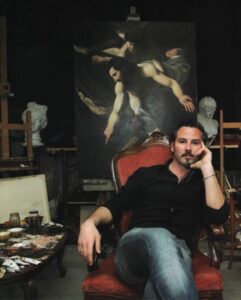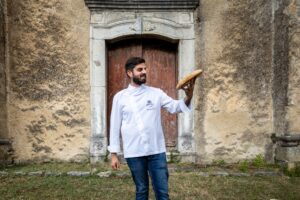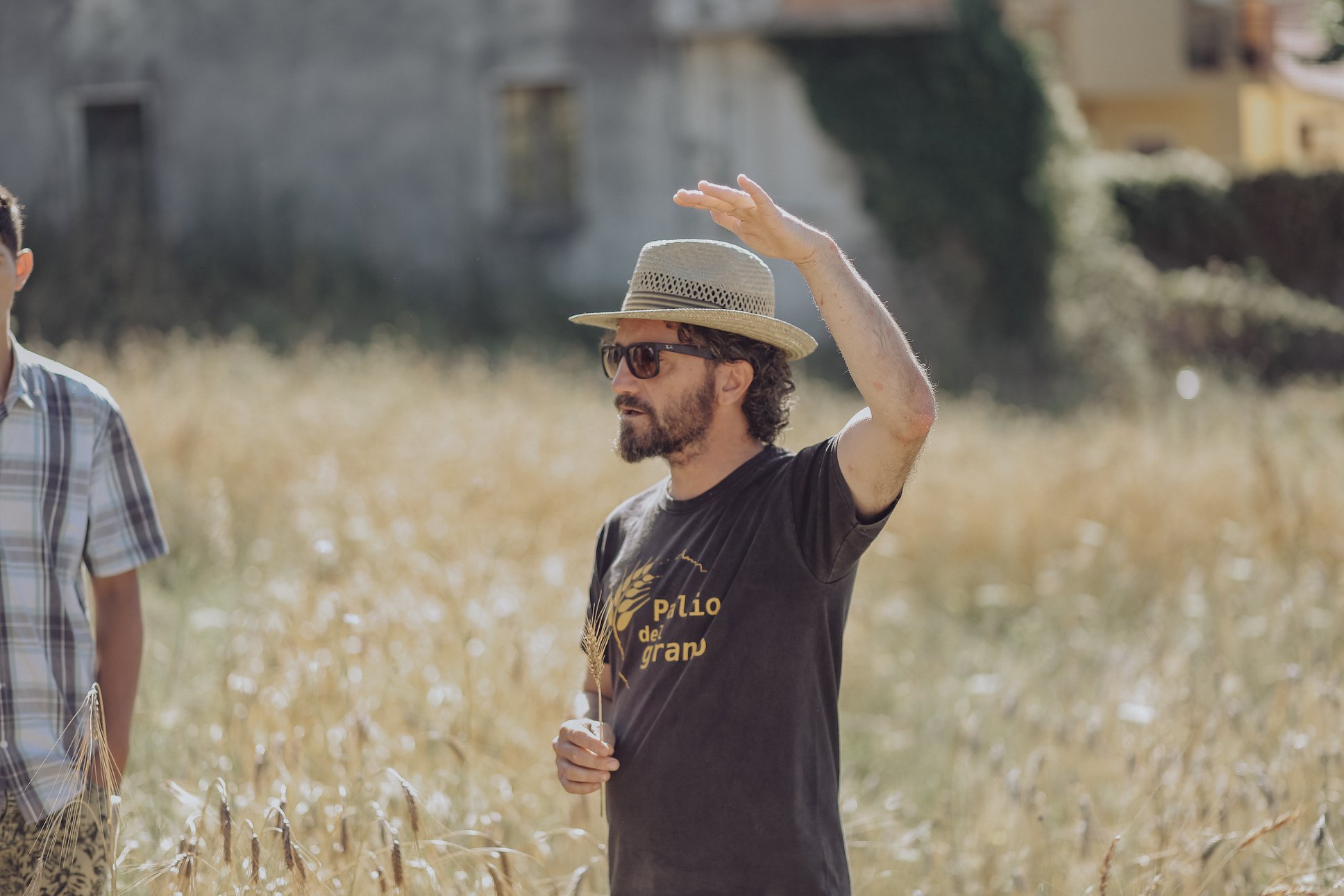
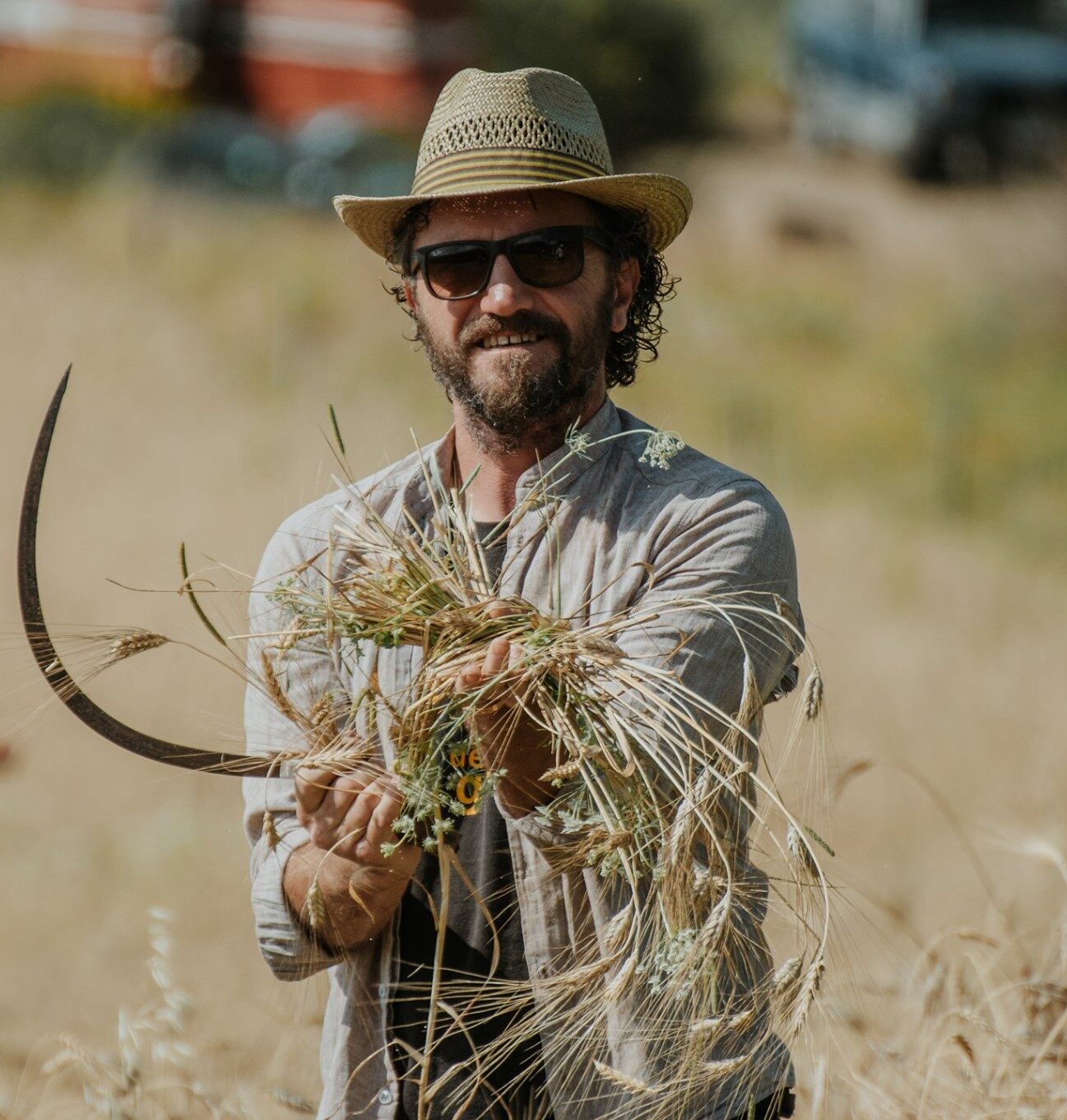
Farmer-sociologist, seed guardian, and builder of cumparaggio relationships, Antonio Pellegrino is president and founding member of the Monte Frumentario – Terra di Resilienza social cooperative, established within the Cilento, Vallo di Diano and Alburni National Park to rebuild connections between agriculture, communities, and inland areas.
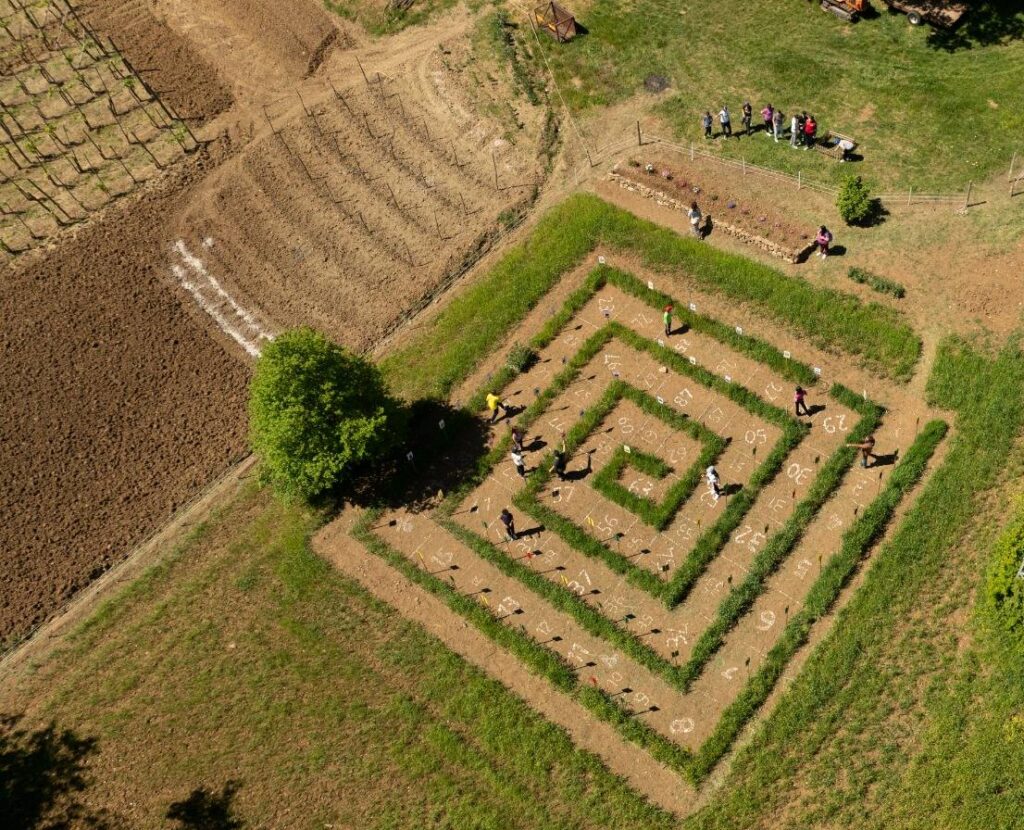
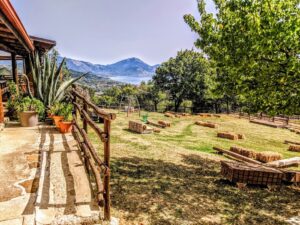
Since 2005, he has been leading the Palio del Grano, a traditional hand-harvesting competition involving the eight districts of the village and their “companion” communities across Cilento. Since 2008, he has curated the Grain Library: an experimental field where dozens of traditional grain varieties are sown each year in symbolic forms — suns, spirals, labyrinths — as a living practice of biodiversity.
“The best way to preserve seeds is to sow them.”
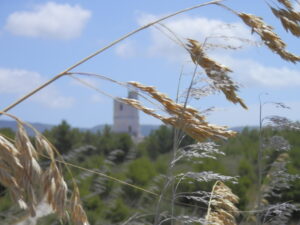
In 2017, he opened the Monte Frumentario stone mill in Caselle in Pittari, where wholegrain flours are produced from local varieties such as Janculidda and Russulidda. These flours are distributed mainly through direct relationships based on trust and reciprocity rather than through conventional commercial systems.
For Antonio, bread is a political act. Growing, milling, and eating one’s own grain in one’s own land means defending food sovereignty, landscape, and cultural autonomy, far from “showcase authenticity” and rural narratives created purely for tourism consumption.
He does not speak of “ancient grains,” but of grains of the future: living seeds in constant evolution, capable of adapting to climate change while preserving an agricultural memory that is still alive.
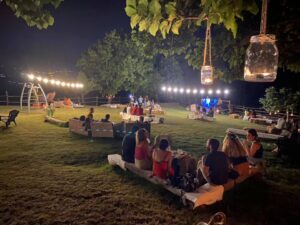
His relational model also rejects the idea of a network as a mere organizational structure. At its core lies cumparaggio: a form of mutual relationship based on trust, reciprocity, and shared responsibility. A community built in the fields, through exchange, celebration, and collective participation.
For Antonio, the real tragedy of inland areas is not depopulation, but disorientation — the loss of awareness of where one belongs. This is why he preserves the rural language of Caselle in Pittari, including dialect words connected to land, seeds, stars, and agricultural cycles, because preserving language also means preserving territory.
In his vision, the true grammar of the Mediterranean is not the Mediterranean Diet reduced to a brand, but the Mediterranean triad of wheat, vine, and olive tree, together with animals, ovens, fields, and communal practices that have shaped the rural landscape of Southern Italy.
His agriculture is organic and regenerative, without herbicides or chemical fertilizers, based on no-till sowing and self-produced biofertilizers. His work also includes employment inclusion programs for people recovering from addiction, through a practical experience grounded in land, responsibility, and peer relationships.
His work is featured in the documentary La Terra Mi Tiene by Sara Manisera, presented at the Trento Film Festival in 2023. In 2021, he received the “Living Heritage” recognition in Ravello.
Yet the words that best describe his world are still the ones spoken standing in the middle of the field:
“We are the grain. Literally. Not in a bucolic sense — that does not interest us at all — but in a real one.”